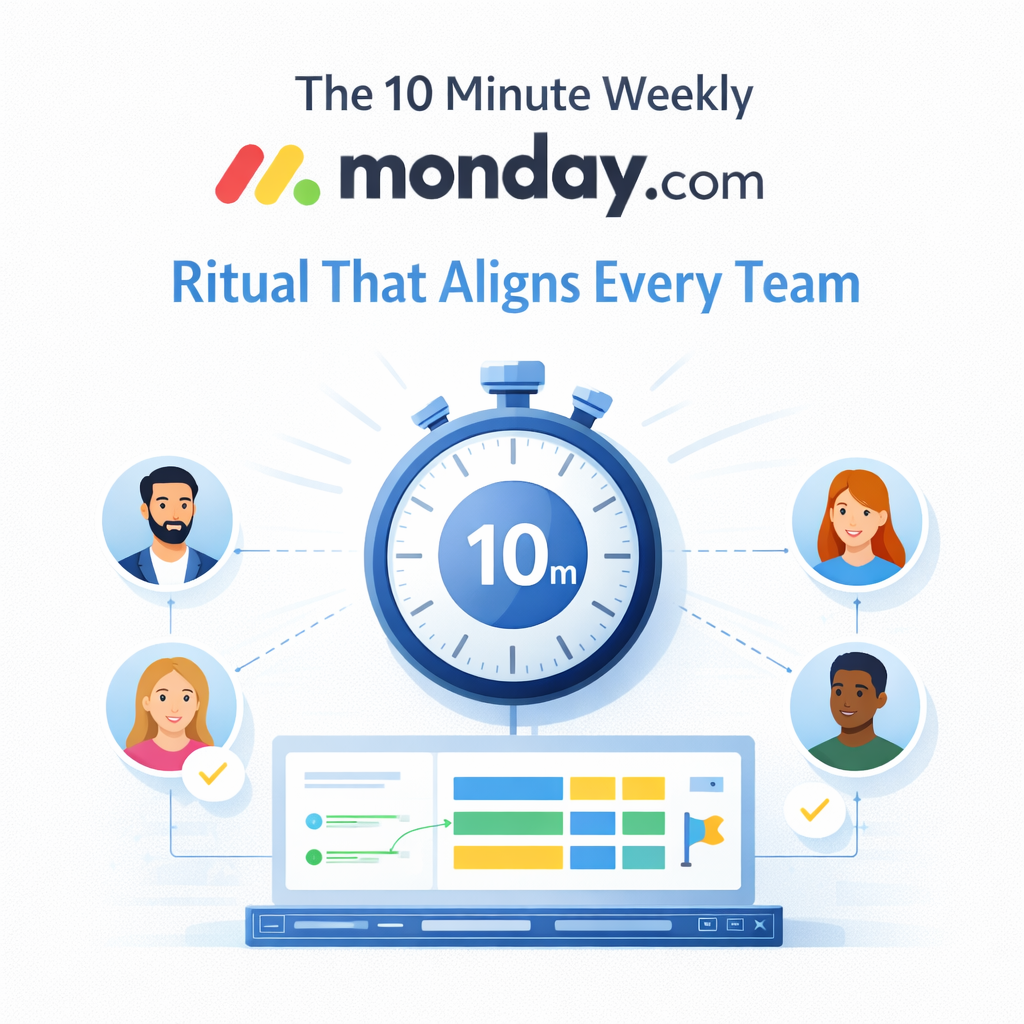


Most teams don’t actually have an alignment problem. They have a visibility problem. Work lives everywhere: Slack threads, meetings, inboxes, half‑updated boards. By Thursday nobody is sure what’s on track, what’s stuck, or who needs help. That’s where a ten‑minute weekly monday ritual earns its keep.
Weekly meetings sound responsible. In practice, they drift. They run long. They get vague. They float away from real work. We see the same patterns: status meetings turn into storytelling. Leaders chase updates instead of seeing them. Boards get updated after meetings instead of before. monday.com starts acting like a tracker, not a system. Misalignment doesn’t explode; it quietly compounds.
This ritual is intentionally simple. It works because it’s short, visible and tied directly to how work already lives in monday.com. Once a week, on the same day and at the same time, the team spends ten minutes reviewing only what needs attention. No slides. No recap speeches. No wandering conversations. Just clarity.
Everyone updates the same core fields before the ritual starts. Then the team reviews only the items that stand out: red or stuck statuses, missed timelines or work without clear ownership. If it’s green, keep moving. If it’s not updated on the board, it doesn’t count.
Each owner updates their answers directly inside monday.com: what moved forward since last week, what’s planned next, and what’s blocked or at risk. In practice, these map cleanly to a status column and a timeline column. The ritual keeps the board honest; the board keeps the ritual short.
Long meetings invite rambling. Short rituals demand precision. Ten minutes pushes teams to prep asynchronously. It rewards clean boards. It surfaces blockers fast. Over time, it builds trust in the system. Teams stop debating reality; they start responding to it.
Here’s how this plays out week to week:
We’ve implemented this ritual across marketing, ops, product and sales teams. It works when monday.com is built with intention. It breaks down when boards are bloated, ownership is fuzzy, or status labels mean different things to different people. It also fails when leaders don’t model the behavior themselves. When it’s built right, this ritual becomes the operating heartbeat. Teams stop asking where things stand because the answer is already visible.
Is this only for project teams? No. We see it work just as well for leadership teams, sales pipelines and internal ops.
Do we still need weekly meetings? Usually yes. They just get shorter and more strategic once status is already clear.
What if people don’t update boards consistently? That’s a system issue. This ritual usually fixes it within a few weeks because it ties visibility to accountability.
Can this work without monday.com? The idea can. monday.com makes it visible, fast and scalable by providing time‑based columns like Status and Timeline and powerful filters.
Alignment doesn’t come from more meetings. It comes from shared visibility and a repeatable rhythm. The ten‑minute weekly monday ritual is small on purpose. That’s exactly why it works.
If you need help implementing this in monday.com, talk to a certified monday.com expert. → Contact Us