

Most teams think their CRM issues are performance problems.
They’re usually adoption problems.
And if adoption is low, the CRM isn’t doing its job.
That’s where monday CRM changes the entire experience.
Below we break down why CRMs fail and what to fix so your team can actually work inside one system.
Sales teams don’t ignore CRMs because they’re lazy.
They ignore CRMs because most feel like extra work.
Legacy tools create a constant drag.
Slow load times.
Buried data.
Too many manual fields.
Too many steps to log a single interaction.
You get messy pipelines, scattered notes, and leadership reports that never match reality.
When your CRM makes work harder, your team will always default to spreadsheets, notebooks, and memory.
Adoption crumbles, and the CRM becomes a historical archive instead of a living workflow.
monday CRM shifts this entirely.
Adoption isn’t about training.
It’s about friction.
Here’s where most CRMs lose users.
Reps spend more time updating the CRM than selling.
If logging activity feels painful, adoption drops instantly.
When team members store different data in different places, trust evaporates.
Pipelines drift, and reporting becomes unreliable.
Sales teams need automation that supports them, not automation that requires a full time admin.
If the system needs constant configuration, reps stop relying on it.
Leaders can’t coach effectively without accurate data.
Reps can’t prioritize without clean boards.
Both sides feel frustrated.
Most CRMs expect your sales process to fit their structure.
That never works for real teams with real nuances.
Adoption thrives when the CRM feels natural.
It fails when the CRM feels like a chore.
monday CRM works because it removes the friction that kills adoption.
Here’s the approach we use with clients at OrangeDot.
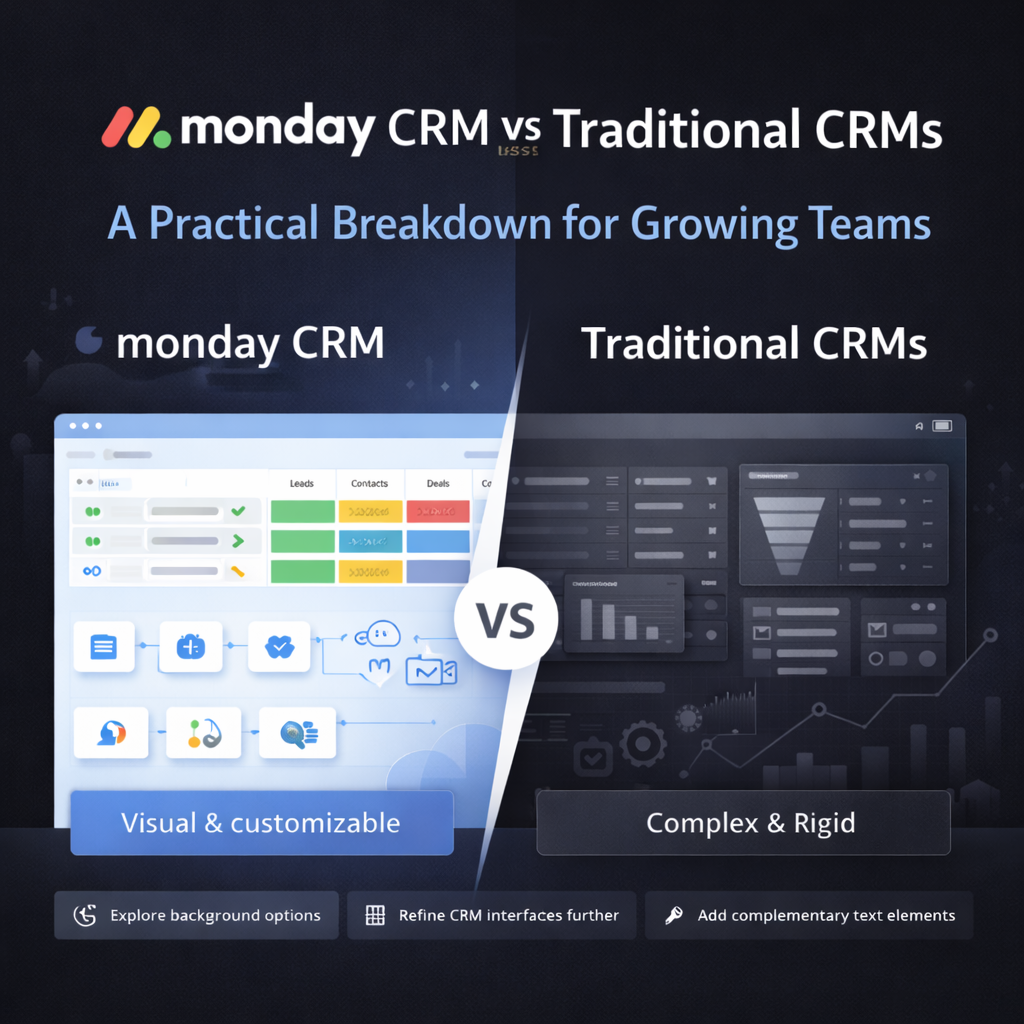
monday CRM feels more like a workspace than a database.
Drag and drop structure.
Visual pipelines.
Click to update.
Automations that make sense.
Reps use it because it feels intuitive without needing hours of onboarding.
Email sync, activity logs, documents, calls, and notes all live inside one record.
No jumping between platforms.
No lost context.
Sales leaders get clean data.
Reps get clarity.
Follow ups.
Lead routing.
Pipeline stage changes.
Reminders.
Reporting.
Automation handles routine tasks quietly in the background so your team can focus on selling, not admin work.
Live dashboards show you real time activity across every pipeline.
Forecasts update automatically.
Managers coach from accurate data rather than chasing spreadsheets.
Not the other way around.
We customize monday CRM to your process instead of forcing your team into a rigid template.
This is the piece most teams never get right.
Configuration is the difference between adoption and abandonment.
Give reps ownership of fields and views.
When they help shape the workflow, they’re more likely to stick with it.
Create a simple weekly pipeline hygiene routine.
Short, consistent cleanup beats end of the month panic corrections.
Start small, then refine.
Launch the essentials first, then layer on automation, dashboards, and advanced logic after your team settles in.
Because they create too much admin work and don’t match how teams actually sell. Complex tools increase friction, which leads to low usage.
It feels intuitive, loads fast, reduces manual updates, and keeps everything in one place. Teams adopt it because it makes their day lighter.
No. Configurations are visual and simple. Most teams manage their own boards after a clean setup.
Yes. You can start with a lean workflow and expand into automations, AI forecasting, advanced dashboards, and custom pipelines as you scale.
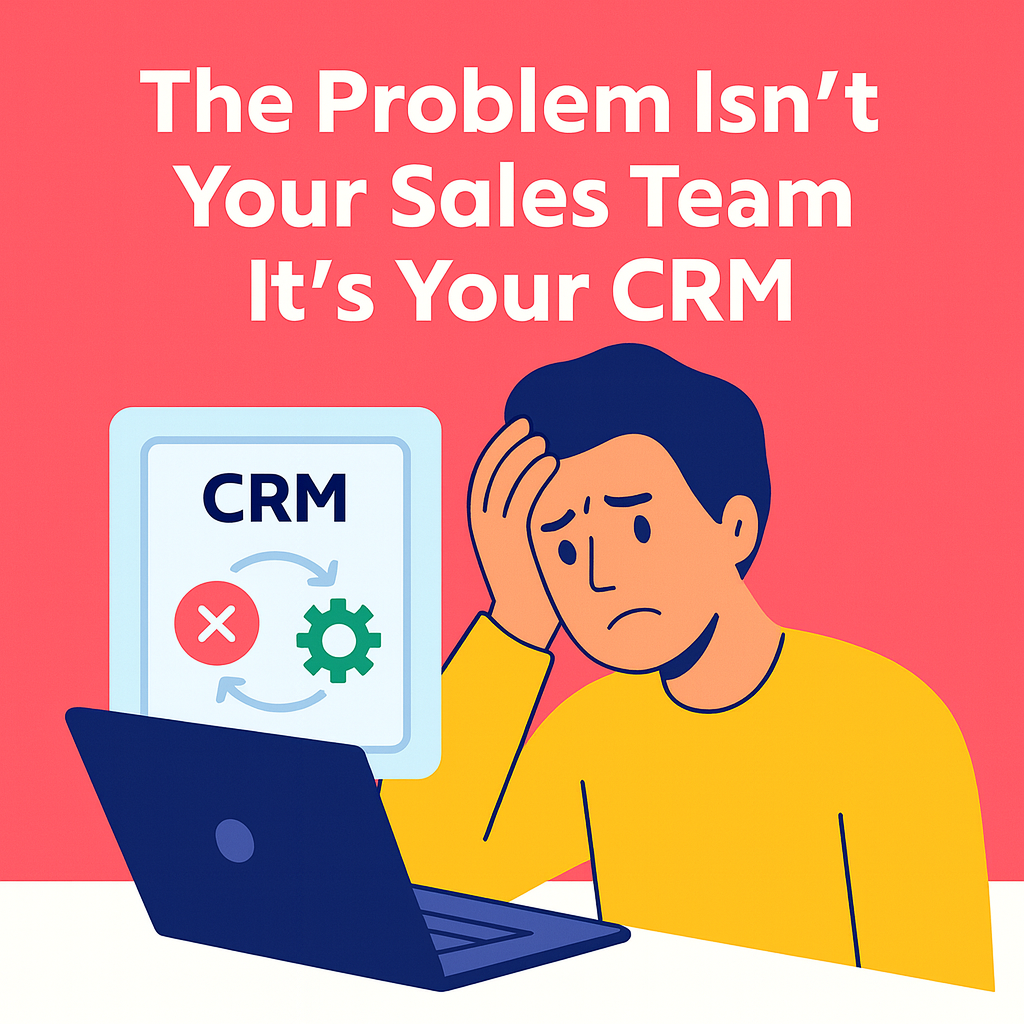
Your sales team isn’t the problem.
Your CRM is.
Adoption improves when the tool supports real work instead of slowing it down.
monday CRM gives teams a clean, intuitive way to manage their pipeline so leaders get visibility and reps stay focused.
If you want a CRM your team actually wants to use, you need something flexible and friendly, not a system built for admins.
Need help implementing this in monday.com?
Talk to a certified monday.com expert → Contact Us